Train your Brain - Attention
- 4.5
- Rating
- 5.00M
- Installs
- Free
- Price
 Analysis by App-foxy
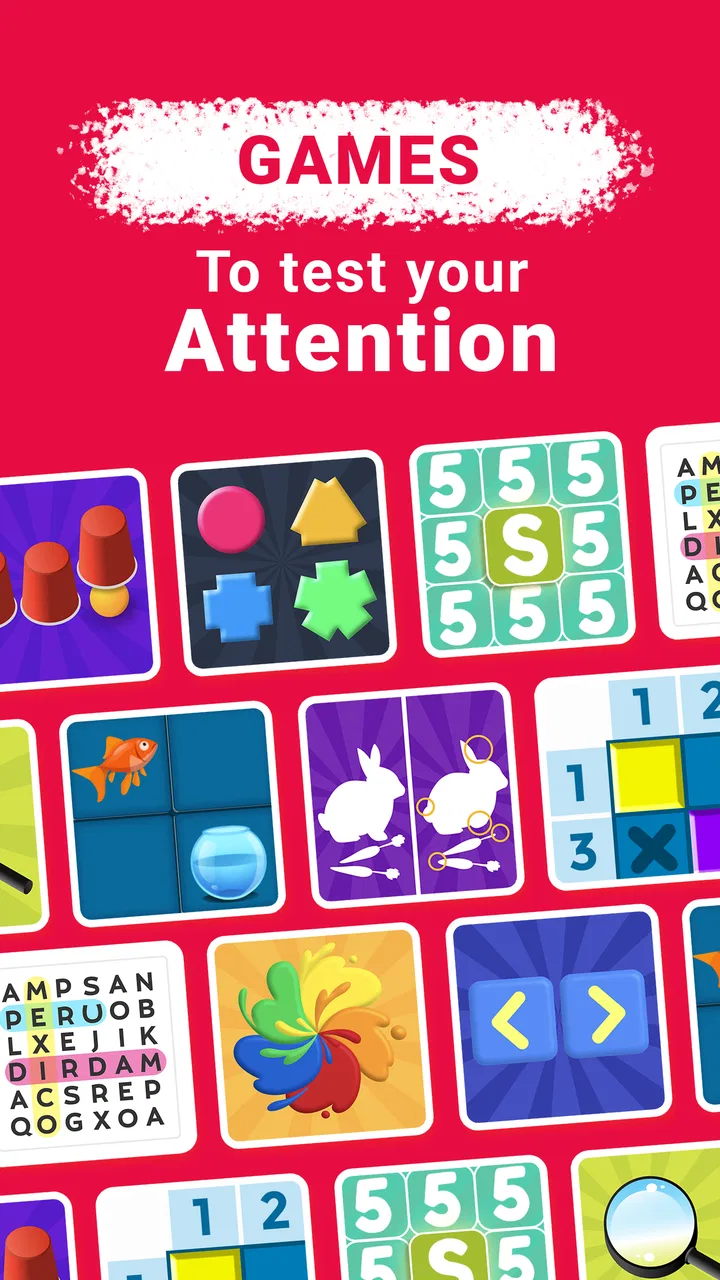
I approached Train your Brain - Attention as a small daily trivia game rather than a full replacement for a course, puzzle collection, or serious cognitive assessment. Its basic promise is simple: give your attention and focus a workout through short brain-training activities. After spending time with it, I found that simplicity is both its strongest quality and its main limitation. It is easy to open, easy to understand, and suitable for a quick session, but it does not offer the depth or competitive structure that some players expect from larger brain-game platforms.
The game comes from Senior Games and is available for free, with optional in-app purchases ranging from $0.99 to $4.49 per item. That purchase structure matters because it changes how I judge the experience: the free entry point makes it approachable, while the paid options mean I would want to understand what they unlock before spending. The age rating is Everyone, so it is designed for a broad audience rather than a narrowly defined group of players.
A simple way to turn spare minutes into attention practice
What I like most is how naturally this kind of game fits into ordinary gaps in the day. I can imagine opening it while waiting for an appointment, taking a short break from work, or using it when I want something more active than scrolling through social media. The activities are built around attention and focus, so the appeal is not mainly about a story, character collection, or long-term adventure. The point is to concentrate on the task in front of me and respond carefully.
You May Also Like

 Blood Strike: 2.5 Anniversary
Blood Strike’s Loadouts Turn Every Drop Into a Tactical Gamble
A close look at Blood Strike’s custom loadouts: how fast access to signature weapons reshapes its battle royale rhythm, rewards preparation, and narrows the gap between fights.

 Pandora - Music & Podcasts
Pandora’s Music Is Easy to Start, but Harder to Recover
Pandora’s strength is its low-effort path from a seed to a station. Its weak spot is how much confidence it asks you to place in connection, setup, and quiet recovery.

 8 Ball Pool
 Is Built on Rivalries, Rematches, and Routine
A close look at the rivalries, rematches, shared routines, and unanswered safety questions that turn a quick pool match into a persistent mobile community.

 Samsung Music
’s Quiet Strength Is Playing What You Already Own
Its reach comes less from spectacle than from dependable access to a personal library. That simplicity is both the app’s strongest retention engine and its ceiling.

 AccuWeather: Weather Radar
AccuWeather Review: A Quick, Clear Forecast for Everyday Decisions
For everyday plans, the best forecast is the one you can understand quickly. AccuWeather makes rain timing, radar, and local conditions easy to act on, with a few trade-offs.

 Hill Climb Racing
Why Hill Climb Racing Still Turns Crashes Into One More Run
A tiny car, a bumpy hill and one more upgrade: Hill Climb Racing keeps resurfacing because its simple chaos makes every near-miss feel personal.
More From Our News Desk



That makes it a good match for people who prefer short mental exercises with clear instructions. You do not need to learn a complicated control system or remember a large fictional world. The experience is closer to a collection of focused challenges than to a traditional trivia night with friends. I found that useful when I wanted a low-commitment game, although players who need variety, narrative, or a strong sense of discovery may find it too restrained.
The store summary describes the game as a way to improve attention and focus skills through brain-training games. I would treat that as the intended purpose, not as a promise of measurable improvement in every area of life. Playing a focused exercise can encourage concentration during that session, but it should not be confused with professional testing or a medical tool. In my view, the healthiest way to use it is as a light mental habit, alongside sleep, movement, reading, and other activities that challenge the mind in different ways.
What the free experience means for a careful player
The fact that the game is free is important for trying it without a financial commitment. I could recommend installing it to see whether the style of challenges suits you before considering any purchase. At the same time, free games can create a different kind of pressure: a player may wonder whether progress, convenience, or access to content is connected to spending. That is where I would slow down and inspect each purchase screen rather than tapping automatically.
The available purchase range is clearly stated as $0.99 to $4.49 per item, but that range alone does not tell me how valuable each item feels during play. I would not assume that buying something makes the training more effective, and I would not assume that avoiding purchases makes the game unusable. My practical advice is to play the free portion first, decide whether you genuinely return to it, and only then consider whether an optional item adds enough value for your routine.
This approach also protects the game from becoming an impulse purchase. A brain-training title should ideally support calm, deliberate sessions, not make the player feel that every mistake must be corrected by paying. If I were introducing it to a family member, I would explain that the free version is the sensible starting point and that purchases should be treated as optional extras, not as a requirement for taking part.
How the experience holds up when you use it regularly
I find regular use most worthwhile when I treat each session as a small check-in, not a test I have to pass. A steady routine can help me notice when distractions or fatigue make it harder to focus, while a simple stopping point keeps practice from turning into score-chasing. That everyday rhythm also makes it easier to judge whether the game’s pace and reliability suit the way I actually use my phone.
Progress feels more useful when you track your own habits
One of the less obvious ways to get more from this type of game is to judge progress by consistency rather than by a single result. Attention changes with tiredness, noise, stress, and the time of day. If I play once while rested and again after a busy day, the difference may say more about my condition than about the game. I would therefore use it at roughly similar times and in similar surroundings if I wanted a fair personal comparison.
A quiet, repeatable routine can turn a casual game into a more meaningful self-check. For example, I might play a short session after breakfast several times during a week, then note whether I felt rushed, distracted, or comfortable. This does not create a scientific measurement, but it prevents me from drawing a dramatic conclusion from one unusually good or bad attempt. The game is more helpful as a prompt to practise focus than as a definitive scorecard for mental ability.
Another useful habit is to stop before frustration takes over. When an attention challenge becomes irritating, continuing immediately can train me to rush rather than concentrate. I prefer to pause, change my surroundings, and return later. That is especially relevant for older players or anyone using the game as a gentle daily activity. The Everyone rating makes it broadly accessible, but accessibility does not mean every challenge will feel equally comfortable for every person.
Where pressure can appear even in a casual brain game
Trivia and attention exercises naturally invite comparison with earlier attempts. That can be motivating, but it can also make a harmless activity feel like an exam. I noticed that the most productive mindset is to treat mistakes as information about my current attention, not as proof that I am getting worse. If the game encourages repeated attempts, I would avoid replaying immediately just to erase an imperfect result.
There is also a difference between improving at the game and improving at the broader skill it represents. Familiarity with a particular task can make that task easier, even if the benefit does not transfer fully to driving, studying, conversations, or office work. That does not make the game pointless; it simply sets a realistic boundary around what I expect from it. I see it as practice in directing attention for a short period, not a shortcut to universal mental performance.
For a realistic everyday scenario, imagine someone working from home who keeps reaching for the phone between tasks. A brief session could provide a deliberate reset before returning to a report or household chore. The value would come from creating a pause and choosing one thing to focus on, not from chasing a perfect result. If the person starts checking purchase prompts or replaying challenges compulsively, the app has stopped serving that purpose and a simple offline break may be better.
Is it fair when spending enters the picture?
My view of fairness is cautious but not negative. Anyone can begin without paying, which lowers the barrier to testing the game. Optional items cost between $0.99 and $4.49 each, so the spending is not hidden behind a single vague “premium” label. Still, a fair experience depends on how clearly the game separates ordinary play from paid convenience or extras. I would read the wording on each purchase screen and avoid assuming that an item is necessary just because it appears prominently.
I also would not describe the game as competitive in the same way as a multiplayer trivia title. Its central value is personal concentration, so spending does not automatically make someone more knowledgeable or more attentive. That is a positive distinction: there is no reason to treat a purchase as buying intelligence. At the same time, players who want a transparent head-to-head contest may prefer a game with public leaderboards, clearly explained scoring, or direct matches. Those features are not part of the experience I would use as the basis for recommending this title.
For families, the free starting point is convenient, but I would still check device purchase controls before handing the game to a child. The Everyone rating describes the intended age suitability, not a guarantee that every household will want unrestricted spending. A parent can reasonably allow the training activities while keeping purchases under adult control. That gives the child access to the game without turning curiosity into an accidental charge.
How it compares with familiar alternatives
Compared with a crossword, this game feels more immediate and less dependent on vocabulary. A crossword lets me sit with a clue and build a solution gradually, while an attention exercise asks for quicker concentration on the task in front of me. Compared with a general trivia quiz, it is less about recalling facts and more about staying mentally present. That makes it a better choice when I want to practise focus rather than test what I know about history, science, or popular culture.
It also differs from a meditation app. Meditation usually asks me to observe thoughts or breathing without pursuing a correct answer. Here, the game format gives me a task and a sense of completion, which may be more engaging for someone who finds silent meditation difficult. On the other hand, a meditation app may be better when the real problem is anxiety or overstimulation rather than inattentiveness.
Large brain-training subscriptions can offer broader libraries, detailed routines, and more elaborate progress systems. I would choose one of those if I wanted a structured long-term programme and was comfortable paying for a larger service. I would choose this game instead when I wanted a straightforward, free starting point with a narrow focus. The trade-off is clear: less commitment and less complexity, but also less reason to expect a comprehensive training plan.
Device expectations and practical details
The game was released on November 2, 2018, and its current version is 2.9.2. It supports devices running Android 7.1 or later. Those details make it relevant to people who keep an older Android phone rather than upgrading frequently. Before installing, I would still check the device’s available storage and system settings, particularly if the phone is used by someone who prefers larger text or has difficulty with small touch targets.
The game has reached over 5 million installs, with an average rating of 4.4 from around 97 thousand ratings and about 1.8 thousand written reviews. Those figures suggest that it has found a substantial audience, but they do not replace personal testing. Ratings can tell me that many people are satisfied enough to score it positively; they cannot tell me whether its pace, visual presentation, and purchase approach fit my own preferences.
I would also keep expectations realistic about the word “training.” If I need formal cognitive screening, help with a learning difficulty, or a tailored rehabilitation plan, this is not the app I would rely on. A qualified professional and a purpose-built service would be more appropriate. Likewise, if I want a social trivia match with friends, I would look elsewhere. This game’s best use is quieter and more personal: a short activity that asks me to pay attention now.
Who should try it, and who should skip it?
I think it is worth trying for adults who want a small routine that is easier to begin than a book of puzzles, for older users who enjoy accessible mental activities, and for families looking for an Everyone-rated game with a simple premise. It can also suit people who become bored with passive breaks and want something that gives their mind a clear job for a few minutes.
I would skip it if I need a deep trivia database, a story-driven game, a guaranteed scientific measure of cognitive improvement, or a highly social competition. I would also be cautious if I know that scores make me anxious or that optional purchases tempt me into spending without thinking. In those cases, an offline puzzle book, a free-form creative activity, or a calmer non-scored routine may provide a better experience.
The most useful advanced tip I can offer is to create a stopping rule before playing. I might decide on one short session, no immediate replay after a mistake, and no purchase until I have used the free experience several times. That simple boundary keeps the game in its proper place. It also makes it easier to tell whether I enjoy the activity itself or merely feel pushed to improve a number.
My trust verdict after weighing the trade-offs
Senior Games has made a focused trivia game that is easy to approach and broad enough for an Everyone audience. I appreciate that it can be tried for free and that the optional purchase range is visible rather than disguised. The game works best when I use it as a modest attention exercise, fit it into a repeatable routine, and resist treating each result as a judgment about my intelligence.
My reservations are equally straightforward. The narrow focus may feel repetitive to players who want a large variety of game types. Optional spending deserves a deliberate look before any purchase, and the game should not be treated as professional cognitive testing or proof of lasting mental improvement. Those are not reasons to reject it; they are boundaries that keep the recommendation honest.
Overall, I would recommend Train your Brain - Attention to someone who wants a free, low-pressure place to start with short focus-oriented games. I would tell a friend to install it, play without spending, and judge it by whether it helps create a useful break in the day. If that routine feels comfortable, the game has earned a place on the phone. If the player wants richer competition, broader trivia, or a more rigorous training plan, choosing a different category of app would be the wiser decision.
FAQs for Train your Brain - Attention
01What is Train your Brain - Attention and how does it work?
Train your Brain - Attention is a cognitive training app designed to enhance your focus and concentration through various brain exercises. It offers a series of puzzles and games that challenge your mental agility, helping to improve attention span. The app tracks your progress, providing insights into your cognitive development over time.
02Is Train your Brain - Attention suitable for all age groups?
Yes, Train your Brain - Attention is designed for a broad audience, making it suitable for both children and adults. The app adjusts the complexity of its exercises based on the user's age and performance level, ensuring that each individual is adequately challenged without feeling overwhelmed.
03Does the app require an internet connection to function?
While Train your Brain - Attention can be used offline for most features, some aspects, such as progress tracking and updates, may require an internet connection. This allows users to enjoy uninterrupted gameplay while still benefiting from regular updates and enhancements when online.
04Are there any in-app purchases or advertisements?
Train your Brain - Attention offers a free version with optional in-app purchases to unlock additional features and levels. The app includes some advertisements, but users can opt for an ad-free experience by purchasing the premium version. This ensures a more streamlined and focused training session.
05How can I track my progress and improvements?
The app features a comprehensive progress tracker that logs your scores, achievements, and areas of improvement over time. It provides visual graphs and statistics to help you understand your cognitive growth. This feature motivates users to continue training by showcasing tangible improvements in attention and focus.
Pros
- Enhances cognitive skills effectively.
- User-friendly interface for all ages.
- Includes a variety of fun exercises.
- Tracks progress with detailed stats.
- No internet connection required.
Cons
- Limited free content available.
- Ads can be intrusive at times.
- In-app purchases can be pricey.
- Some exercises are repetitive.
- Occasional app crashes reported.

Train your Brain - Attention
Gallery